
How to Identify Low-Quality Fiberglass Sheets Before You Buy
Get high-quality fiberglass, polycarbonate, and polypropylene sheets tailored to your industrial and OEM requirements.
As a contractor or builder, you’ve probably been there — you source fiberglass sheets at what seems like a great price, install them on a factory or warehouse roof, and within a year the client is calling about leaks, discolouration, or cracks. The problem isn’t the material category; it’s the quality of what was supplied.
Low-quality fiberglass sheets are alarmingly common in the Indian market, and they can cost you your reputation — not just the client’s money. This guide walks you through exactly how to identify substandard fiberglass sheets before they ever reach your job site.
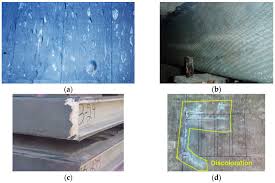
1. Check the Colour Consistency and Clarity
- High-quality fiberglass sheets have a uniform, consistent colour across the entire surface — whether translucent, white, or tinted. What to watch out for:
- Patchy or uneven colour distribution across the sheet
- Yellowing or brownish tints in a product sold as translucent or clear
- Milky cloudiness in sheets that should have high light transmission
- Visible swirls or streaks in the resin layer.
Why It Matters: Colour inconsistency is a direct sign of uneven resin distribution or the use of recycled/low-grade raw materials. Such sheets will degrade much faster under UV exposure and heat.
💡 Pro Tip: Request a physical sample before ordering in bulk. Hold it up against daylight to check for uniform light transmission
2. Measure the Thickness — and Verify It
Specifications on paper mean nothing if the actual product doesn’t match. Use a vernier calliper to measure thickness at multiple points across a sample sheet. Look for:
- Thickness variation of more than ±0.1 mm across the sheet
- Sheets that are thinner at the edges than the centre
- A sheet labelled as 1.5 mm measuring consistently below 1.3 mm
Industry Standard: A reliable fiberglass sheet should have less than 5% variation in thickness across its surface.
💡 Pro Tip: Always measure at least 5 different points — two corners, two mid-edges, and the centre. Cheap sheets often taper toward the edges.
3. Test Flexibility and Impact Resistance
Quality fiberglass sheets have a controlled flex — they bend without cracking and spring back to shape. Substandard sheets fail this basic test in predictable ways:
- They crack or show whitening (stress whitening) when gently flexed by hand
- They feel brittle and stiff rather than having a natural give
- They make a dull, flat sound when tapped — good sheets produce a clear, resonant sound
Quick On-Site Test: Gently flex a corner of the sheet 2–3 cm inward with both hands. If it whitens or cracks, reject the batch.
4. Examine the Surface Finish and Fibre Pattern
Run your hand across the surface of the sheet. A quality fiberglass sheet should feel smooth, with fibres fully embedded in the resin matrix. Red flags include:
- Rough, abrasive texture with visible exposed glass fibres
- Pinholes or voids in the surface — signs of air entrapment during manufacturing
- Resin-rich patches next to fibre-rich patches (uneven lamination)
- Surface that peels or delaminates when scratched with a fingernail
💡 Pro Tip: Exposed fibres absorb moisture and degrade rapidly under Indian monsoon conditions. Avoid any sheet where the glass weave is visible without pressing down on the surface.
5. Verify UV Stabilisation and Weather Resistance
This is the hardest to check visually but among the most important for roofing applications. Low-quality sheets skip or reduce UV stabiliser additives to cut costs. Ask the supplier:
- Does the sheet have a UV-protective coating or UV-stabilised resin?
- What is the expected service life under direct sunlight in a tropical climate?
- Can they provide test reports or certifications (e.g., IS 12866 or equivalent)
Warning Sign: If a supplier cannot provide any documentation on UV performance and only quotes a price, walk away. UV-degraded sheets become brittle and lose light transmission within 2–3 years instead of the expected 10–15 years.
6. Check Light Transmission for Translucent Sheets
For factory or warehouse roofing, the light transmission percentage matters for energy savings and worker comfort. A reliable supplier should specify:
- Exact light transmission % (typically 50%–85% for industrial use)
- Whether the value is consistent across the full sheet width
- How much transmission is retained after 5 years of outdoor use
💡 Pro Tip: If possible, use a simple lux meter to compare light readings through the sample sheet versus a known-standard sheet. Significant variance (>10%) signals quality issues.
7. Assess the Weight — Lighter is Not Always Better
Low-quality fiberglass sheets often have a lower GSM (grams per square metre) because manufacturers reduce glass fibre content to cut costs. Ask for the GSM specification and verify it:
- A standard 1.5 mm fiberglass roofing sheet should weigh approximately 1,800–2,200 GSM
- Anything significantly lighter suggests lower fibre content, meaning less strength and longevity
Simple Check: Weigh a 1×1 metre sample on a digital scale. Compare against the supplier’s stated GSM. A 10%+ shortfall is a clear rejection criterion.
8. Smell and Smoke Test (for Resin Quality)
This is an advanced check but worth knowing. High-quality fiberglass sheets use premium polyester or FRP-grade resins. Poor-quality sheets often use recycled or lower-grade resins that have a distinct smell:
- Persistent sharp chemical odour even at room temperature
- Excessive dark smoke when a small offcut is burned (a small controlled test away from site)
💡 Pro Tip: This test is more relevant when purchasing large quantities and you have reason to suspect the product. Always conduct it safely and in a ventilated area.
Check | Good Sign | Red Flag |
Colour | Uniform, consistent throughout | Patchy, streaked, yellowed |
Thickness | Within ±0.1 mm of stated spec | Thinner at edges, inconsistent |
Flexibility | Bends without cracking | Stress whitening or cracks |
Surface | Smooth, fibres fully embedded | Rough, exposed glass fibres |
UV Info | Certification provided | No documentation available |
Weight/GSM | Matches stated GSM ±5% | Significantly underweight |
Related Guides from Hukma Global
Before finalising your material selection, explore these related resources:
Conclusion: Quality You Can See, Feel, and Measure
Low-quality fiberglass sheets rarely fail all at once — they degrade gradually, leading to client complaints, warranty calls, and damaged contractor reputation. The checks above take less than 15 minutes per batch and can save you from a much costlier mistake down the line.
At Hukma Global, we manufacture fiberglass sheets to consistent quality standards, with full transparency on specifications, GSM, UV performance, and light transmission. Whether you’re roofing a factory shed, a warehouse, or an industrial facility, we’re here to make sure the material never becomes the problem.
Need Reliable Fiberglass Sheets for Your Next Project?
Contact Hukma Global today for samples, specifications, and bulk pricing.
Frequently Asked Questions
Everything you need to know about our industrial sheets and supply process.
How can I quickly test fiberglass sheet quality on-site without any equipment?
Use three simple hand tests: (1) Flex a corner gently — good sheets bend without cracking or whitening. (2) Run your palm across the surface — it should feel smooth with no exposed fibres. (3) Tap the sheet — a clear, resonant sound indicates good density. These three checks take under 2 minutes and can save you from a bad batch.
What is the ideal thickness for fiberglass sheets used in industrial roofing?
For industrial and warehouse roofing in India, 1.5 mm to 2.0 mm is the standard range. Thinner sheets (below 1.2 mm) are not recommended for large-span roofs as they flex excessively under wind and rain load. Always verify actual thickness with a calliper at 5+ points — don’t rely on the label alone.
How do low-quality fiberglass sheets affect a roofing project in the long run?
Substandard sheets typically start showing problems within 1–3 years — yellowing and loss of light transmission, brittleness and surface cracking, leakage at fastener points due to micro-fractures, and delamination during monsoon seasons. What looks like a cost saving at purchase often becomes an expensive replacement job within a few years.